


Legal teams are no strangers to surprise. A sudden data breach, a new vendor onboarding, a marketing campaign that needs urgent legal review…
You might not know when these requests are coming, but you do know they’re inevitable. And a familiar problem arises when that work arrives and the team isn’t ready. Without structure or processes in place, legal is left scrambling, tracking down stakeholders, piecing together context from scattered emails, switching between platforms, and manually coordinating next steps. It’s inefficient, error-prone, and stressful.
But high-performing legal teams take a different approach.
They leverage a powerful advantage: operational organization.
They build systems ahead of time that allow them to respond efficiently when the time comes. With the right intake, triage, and matter management processes in place, they’re able to handle urgent requests with ease, clarity, and confidence, because the workflow is already mapped, and the tools are already connected to each other.
So, let’s break down why operational organization is legal’s biggest competitive advantage and how the right structure allows your team to win every time, no matter what lands on your desk.
What Happens When Legal Isn’t Prepared?
Every legal team deals with unpredictable requests. But when the right systems aren’t in place, even routine matters become time-consuming and chaotic.
Without a clear legal front door, business users don’t know where to go, so requests end up coming in through a mix of emails, Slack messages, and ad hoc forms. There’s no consistency in the information provided, which means legal often has to follow up just to collect matter details and understand the request. And with no centralized dashboard or workflow in place, matters are tracked manually, or worse, not tracked at all. This creates several costly problems:
- Visibility Gaps: Legal leaders can’t see the volume, type, or status of incoming work.
- Wasted Time: Lawyers spend hours gathering missing information or duplicating effort already done elsewhere.
- Misaligned Priorities: High-risk issues might get buried, while low-value tasks eat up valuable capacity.
- Frustration: The business sees delays, legal feels overwhelmed, and the team becomes reactive by default.
Disorganization slows things down and over time, erodes confidence in legal as a strategic partner. It can also lead to burnout, inefficiency, and missed opportunities to demonstrate value.
What the Organized Team Does Differently
Organized legal teams don’t wait for issues to arise, they design for them in advance. While the nature and timing of requests may be unpredictable, the types of work that come through legal are often repeatable: NDAs, marketing approvals, vendor onboarding, contract escalations, data privacy incidents, and more.
Rather than reacting to each request as a one-off, high-performing legal teams implement structured systems that anticipate these scenarios. They establish workflows that capture the right information, automate the right steps, and route matters to the right people, consistently and at scale.
A Single Front Door for Intake
Organized legal teams establish one consistent, accessible entry point for all legal requests. Whether submitted through smart forms, AI-enabled chat, or integrations with tools like email, Slack, or Teams, every request enters the same system. This eliminates the ambiguity of “where do I send this?” and ensures nothing gets lost across inboxes or informal channels. It also gives legal a clear picture of what’s coming in, who it’s from, and what’s required.

Built-In Triage Logic
High-performing teams don’t treat all requests the same. Instead, they apply predefined business rules to sort and prioritize work. Low-risk matters are often resolved automatically or handled via self-service. Higher-risk or more complex issues are escalated to the appropriate legal professional. This kind of structured triage prevents legal from becoming overwhelmed by volume and ensures attention goes to the matters that truly need it.

Automated, Repeatable Workflows
Instead of reinventing the wheel for every new matter, organized legal teams build repeatable workflows for common use cases like NDAs, contract approvals, vendor onboarding, or marketing reviews. These workflows guide requests through a standardized process with clear steps, ownership, and timelines. Legal automation reduces manual coordination and helps maintain consistency, even as request volume increases.

Centralized Matter Tracking
Rather than relying on spreadsheets or fragmented systems, structured teams use a matter management software to maintain a centralized view of all legal work. Every legal matter is tracked in one place, with full context: documents, stakeholders, status, communication history, and key dates. This allows legal to stay on top of deadlines, monitor progress, and hand off matters without losing continuity.

System Integration Across Platforms
Organized teams ensure that legal processes are integrated with the tools used across the business, whether that’s document management systems, CLMs, e-billing platforms, or communication tools. By connecting systems, they reduce duplication, minimize manual work, and ensure data stays consistent and up to date across all platforms.

Real-Time Visibility and Reporting
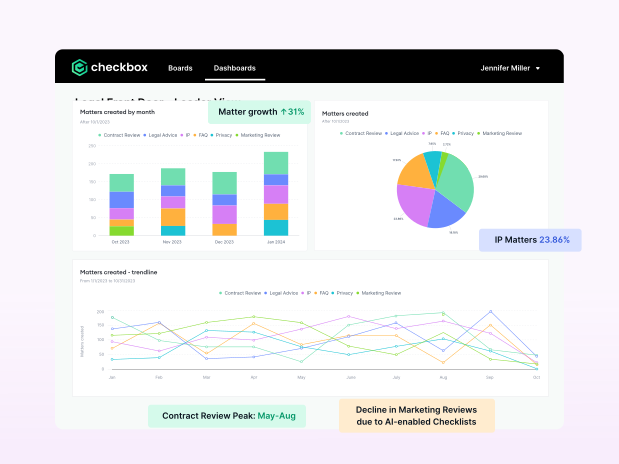
Successful legal teams don’t rely on anecdotal evidence to understand how they’re performing. They have the data. With real-time visibility into legal work, they can track matter volume, turnaround times, workload distribution, and more, allowing them to more effectively plan for what’s next. With historical data, legal teams can forecast demand, model resource needs, and proactively adjust to changes in business activity. If a new initiative is expected to increase contract volume by 30%, they know exactly what that means for capacity. Or if a self-service process is introduced, they can compare before-and-after metrics to measure its effectiveness. This kind of operational insight helps legal teams continuously improve, make data-backed decisions, and confidently demonstrate their value to the business.
How Operational Organization Sets Legal Up to Win
With standardized processes and connected systems in place, legal doesn’t have to worry about being bogged down by admin, follow-ups, or trying to locate missing information. Instead, they spend more time doing the work that truly moves the needle such as giving strategic advice, navigating risk, and enabling the business.
Legal Becomes Faster → Self-service tools and automated triage mean requests move quickly and efficiently, without waiting on manual input or clarification.
Legal Becomes More Reliable → With every matter logged, tracked, and linked to the right documents, decisions are made with full context.
Legal Becomes More Visible → Real-time dashboards give GCs and legal ops leaders full insight into team workload, turnaround times, and value delivered.
Legal Earns Trust → The business sees a team that’s responsive, easy to engage with, and focused on solutions.
Checkbox enables this transformation by giving legal a purpose-built platform to consolidate intake, automate workflows, and manage matters end to end. And because it integrates with the tools legal already uses like Ironclad, Brightflag, SharePoint, and Salesforce, legal stays in control without having a rip-and-replace of existing systems.
Key Takeaways
In today’s fast-moving business environment, the teams that succeed are the ones who step back, build systems, and create structure that lets them operate with confidence.
When requests are centralized, processes are automated, and matters are managed from a single source of truth, legal stops scrambling and starts scaling. In turn, they position themselves as a reliable, efficient partner to the business.
Checkbox gives legal teams the foundation to do exactly that. From intake to resolution, everything runs through one platform that is connected, visible, and controlled.

The best way to prepare for the unexpected isn’t to hope it won’t happen. It’s to be ready when it does.
Checkbox’s paralegal software automates the busywork so you can focus on what matters. Book a demo to see it in action.


